
Hiring the wrong roofing contractor costs real money. Not a little money. We’re talking thousands of dollars in repeat repairs, voided manufacturer warranties, and structural damage that compounds quietly behind drywall for months before anyone notices. The mistakes homeowners make tend to follow a predictable pattern, and most of them happen before a single shingle gets touched.
Skipping a Proper Assessment Before Getting Quotes
Getting three quotes from three contractors sounds responsible. It is not enough on its own. If no one has actually examined your decking, flashing, underlayment, and ventilation before those quotes are written, you are comparing numbers that mean nothing. A quote built on a visual scan from the driveway is a guess dressed up as a price.
A proper assessment means a contractor physically gets on the roof, checks for soft spots in the OSB or plywood decking, looks at the drip edge condition, probes around pipe boots and chimney flashing, and checks attic ventilation. That process takes 30 to 60 minutes on a typical residential home. Anything faster is a red flag. Bravo Roofing consistently finds that homeowners who skipped this step end up with surprise add-on charges mid-project, because the original quote never accounted for rotted decking or improper flashing that only showed up once old shingles were stripped.
A professional roof inspection before any major work is the single clearest way to anchor a quote to reality rather than optimism.
Choosing on Price Alone
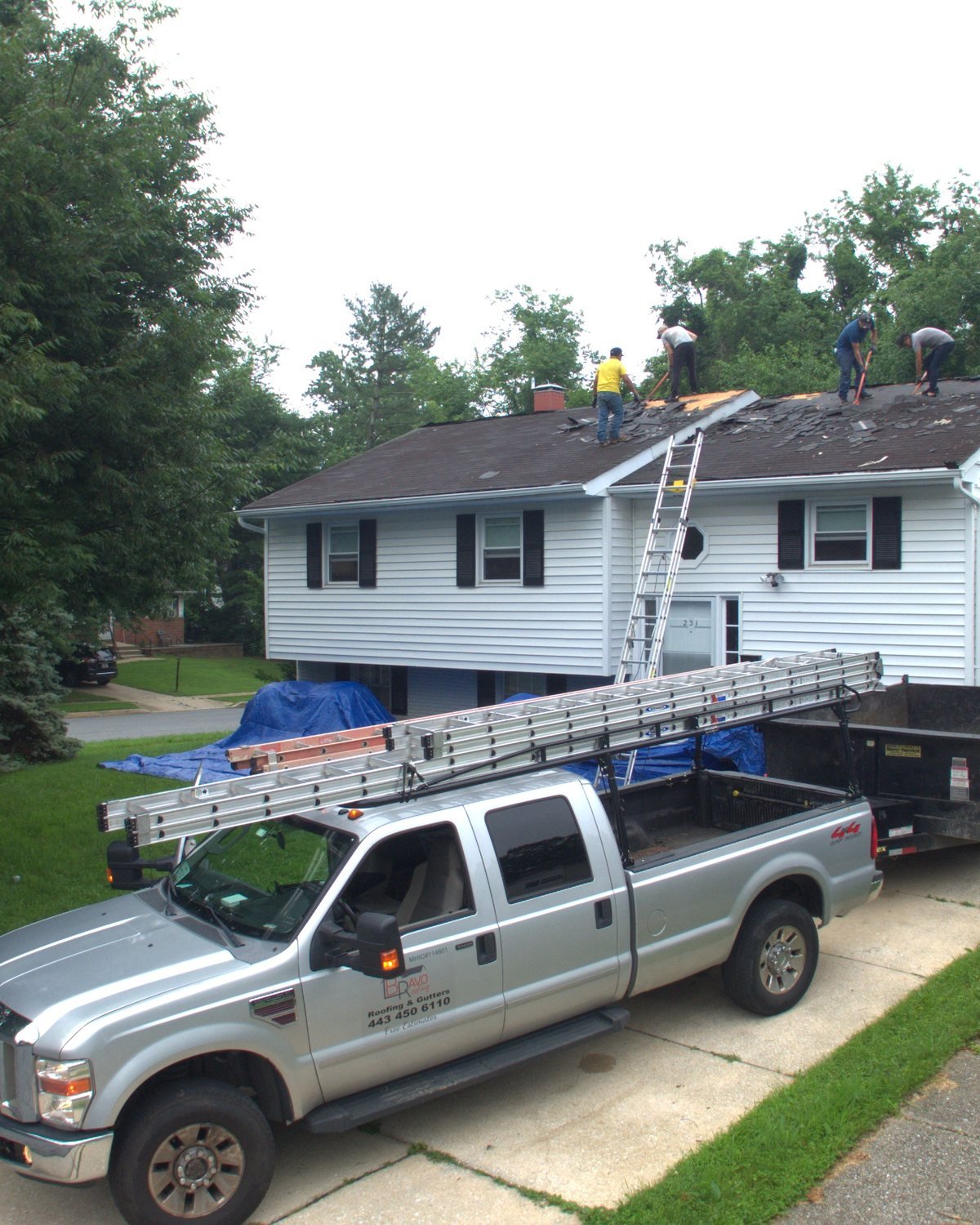
Low bids are seductive. They are also frequently the most expensive decision a homeowner makes. A contractor offering a price 25 to 30 percent below every competitor is usually cutting somewhere: thinner underlayment, fewer nails per shingle, skipped ice-and-water shield in valleys, or unlicensed labor. None of those shortcuts are visible once the job is done.
In Pikesville, MD, many older homes in neighborhoods like Gwynnvale have complex rooflines with multiple valleys, dormers, and low-slope sections that demand careful flashing work. A crew rushing to hit a low-margin number on that kind of roof will leave vulnerable points that leak within two to three years. By then, the contractor may be unreachable and the homeowner is paying twice.
Ask for the material specifications in writing. Specifically: what brand and weight of underlayment, what shingle line and class, whether ice-and-water shield will be used at eaves and valleys, and what the nail pattern will be. A contractor who cannot or will not answer those questions in writing is not worth hiring at any price. You can review common roofing materials to understand what you should be expecting before you even ask.
Not Verifying Insurance and Licensing
This one is boring. Do it anyway.
Maryland requires roofing contractors to carry both general liability insurance and workers’ compensation. If a worker falls on your property and the contractor has no workers’ comp, the liability can land on your homeowner’s policy. That is not a hypothetical. It happens. Ask for a certificate of insurance, and call the insurer directly to verify it is active. Do not accept a PDF without verification. Certificates can be faked or expired.
Licensing matters too. Maryland’s Home Improvement Commission licenses home improvement contractors, and you can check a license number on the MHIC database. An unlicensed contractor cannot pull permits. A job done without a permit can create complications when you sell the home, and some insurance carriers use unpermitted work as grounds to deny claims.
Bravo Roofing recommends that every homeowner in Pikesville, MD run this check before signing anything, regardless of how professional a contractor appears or how many yard signs they have in the neighborhood.
Misunderstanding What the Contract Actually Covers
A signed contract that lacks specifics is not protection. It is a document that benefits whoever wrote it. Vague language like “roof replacement” without specifying materials, disposal of old shingles, flashing replacement, and workmanship warranty terms leaves enormous room for dispute.
Every roofing contract should spell out: the exact shingle product and color, whether existing flashing will be replaced or reused, how many layers will be torn off, how debris will be managed, the payment schedule, and the duration and scope of the workmanship warranty. Manufacturer warranties on shingles like GAF Timberline or Owens Corning Duration are separate from the contractor’s workmanship warranty, and both matter.
Payment schedule is worth particular attention. A contractor demanding more than 10 to 15 percent upfront as a deposit is asking for more trust than the situation warrants. Full payment before completion removes your leverage entirely. Pay in stages tied to verified milestones. For homeowners dealing with storm damage, the process of coordinating insurance claims adds another layer where contract clarity becomes even more important. The roofing guides available from Bravo Roofing cover that process in practical detail.
Bravo Roofing operates out of 1829 Reisterstown Rd Ste 350, Pikesville, MD 21208, and serves homeowners throughout the area as a licensed, insured roofing contractor. Reach them at (443) 450-6110 for straightforward answers on any of the issues covered here.
Frequently Asked Questions
What should I do before getting quotes from roofing contractors?
Before getting quotes, ensure that the contractor physically examines your roof. This includes checking the decking, flashing, underlayment, and ventilation, as a proper assessment helps anchor the quote to reality rather than guesswork.
How can I tell if a roofing contractor is qualified?
Verify that the contractor has both general liability insurance and workers’ compensation coverage. In Maryland, it’s also essential to check if they are licensed through the Home Improvement Commission, as unlicensed contractors cannot pull permits, which can complicate future home sales.
What should I look for in a roofing contract?
A good roofing contract should specify the exact materials being used, including the shingle product and color, as well as details on flashing replacement, debris management, and the payment schedule. Vague terms can lead to disputes later, so clarity is crucial.
What are the risks of choosing a roofing contractor based solely on price?
Choosing a contractor based only on low price can lead to significant long-term costs. Contractors offering bids 25 to 30 percent below competitors often cut corners on materials or labor, which may result in leaks and repairs within just a few years.
Get Directions to Bravo Roofing
🎧 Listen to this as a podcast
Also on Apple Podcasts, Spotify, and Amazon Music.