

A homeowner calls about a leak above their bedroom. A contractor goes up, replaces two cracked shingles, reseals a flashing joint, and the job is done in under two hours. Another homeowner calls with what sounds like the same problem, and the crew is still there . Same symptom, very different reality underneath. The gap between a quick fix and a drawn-out job almost never has to do with how fast the crew works. It comes down to what the roof has been hiding, how long it has been hiding it, and what complications the structure itself introduces.
What the Crew Finds Once They Get Up There
The single biggest variable in any roofing job is the condition of the decking beneath the surface material. Shingles can look tired but still be doing their job. The plywood or OSB underneath, though, absorbs moisture silently for months or years before anyone notices a stain on the ceiling. When a crew pulls back damaged shingles and finds soft, spongy decking, the scope of the work changes immediately. Replacing rotted deck boards adds material cost and time, because the old sections have to come out cleanly, new wood has to be cut and fastened properly, and everything needs to be dried and inspected before new underlayment goes down.
Flashing is another place where apparent simplicity falls apart on contact. A chimney with step flashing that was installed poorly years ago, or counter-flashing that has separated from the mortar, can take several hours to address correctly. Bravo Roofing has found that homeowners in Villa Nova and Pikesville, MD often have older chimneys where the original flashing was embedded directly into mortar joints that have since crumbled. Repointing those joints and resetting the flashing the right way takes real time, and skipping it just moves the leak a few inches.
How the Roof’s Age and Design Work Against Speed
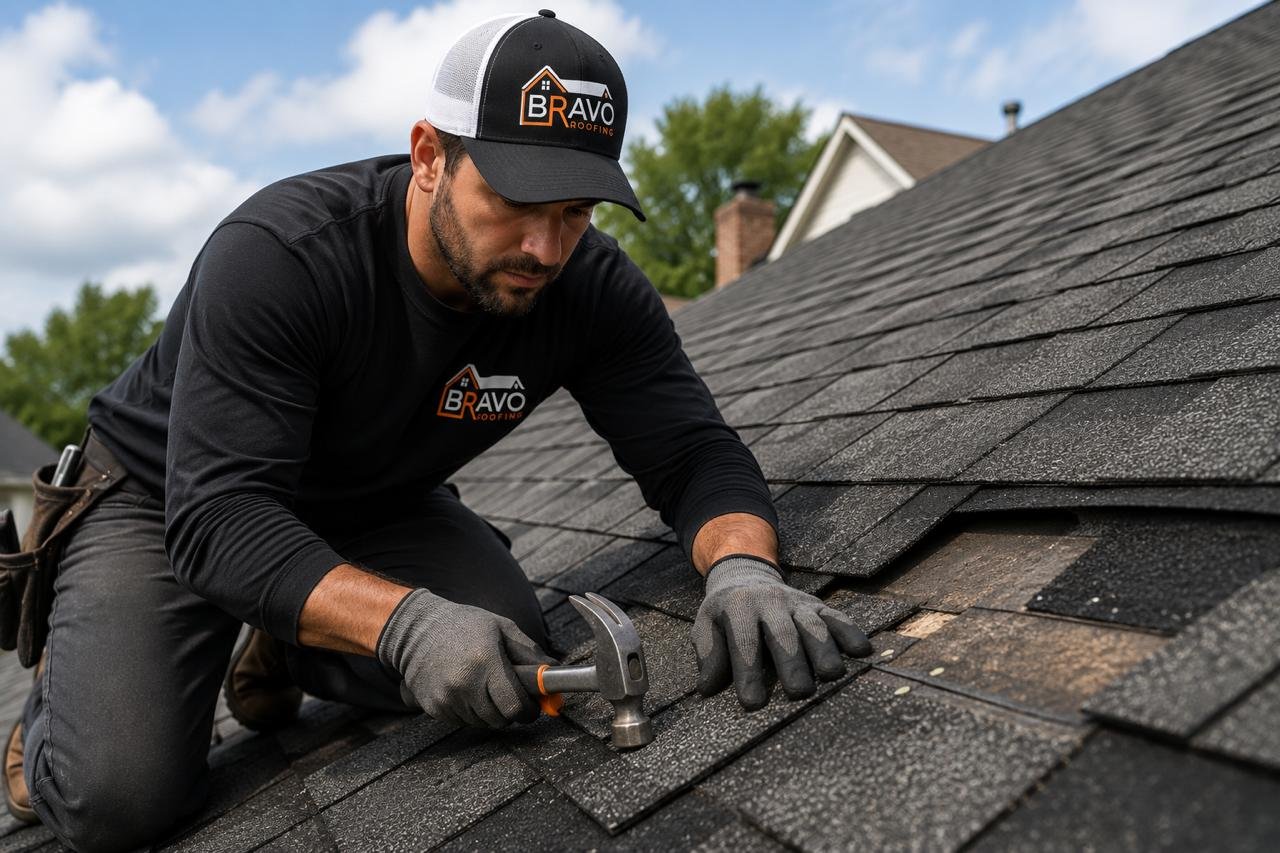
Pitch and complexity matter more than most people expect. A straightforward low-slope or gently pitched roof lets a crew move quickly and safely. A steep-pitch roof with multiple valleys, dormers, and intersecting planes requires more safety rigging, more careful cutting around transitions, and more time spent on details that a simpler roof would not have. Some homes near Old Court Road and Reisterstown Road have rooflines with four or five different planes meeting at awkward angles. Each intersection is a potential water entry point, and each one has to be addressed individually.
Roof age compounds every other factor. A 15-year-old roof with a localized problem is usually straightforward to address because the surrounding materials are still sound enough to work with. A 25-year-old roof where the damaged area is surrounded by brittle, granule-stripped shingles creates a different problem. You cannot just replace the bad section cleanly when the adjacent shingles crack the moment you try to lift a tab to slide new material underneath. The crew then has to decide how wide to go, and that decision affects both cost and timeline. Bravo Roofing’s general guidance is that once more than 30 percent of a given slope needs attention, the conversation shifts from patching to weighing a full roof replacement against ongoing repair costs.
Access, Weather Windows, and Material Availability
Physical access to the roof is something customers rarely think about until it becomes a problem. A two-story colonial with mature trees overhanging the back slope requires careful ladder placement and sometimes branch trimming before work can even begin safely. Tight side yards, fences, and landscaping all affect where a crew can set up and how efficiently they can move materials up and down. These are not excuses for slow work; they are real constraints that add legitimate time.
Material matching slows things down more often than people realize. Shingle manufacturers change color blends over time, and a discontinued color from eight or ten years ago may require sourcing from a specialty distributor or waiting on a special order. On a home where the cosmetic match matters, this is worth doing right. Rushing it and installing a visibly mismatched patch creates a different kind of problem.
Weather windows are the other honest constraint. A job that starts on a dry morning can be interrupted by afternoon rain, and wet decking or wet shingles cannot be covered until they dry adequately. In the Pikesville, MD area, where humidity can keep materials damp longer than expected, this is a real factor. If you want a deeper look at how different conditions affect timelines and decisions, the Roofing Answers section covers a range of practical questions worth reading before you call anyone.
What Customers Can Do to Help the Process Move Faster
Clearing the area around the house before the crew arrives makes a real difference. Moving vehicles, patio furniture, and anything stored against the foundation gives the crew room to work without stopping to ask permission or work around obstacles. Knowing approximately when the problem started also helps. A leak that appeared two weeks ago after a heavy rain is a different diagnostic problem than one that has been showing up intermittently for two years. The longer a leak has been active, the wider the crew has to look for secondary damage.
Bravo Roofing also recommends getting a roof inspection before committing to a specific scope of work, particularly on homes over 15 years old. A proper inspection identifies problems that are not yet leaking but will be soon, which lets you address everything in one visit rather than calling back three months later for something that was already visible. For homeowners in Villa Nova and the surrounding Colonial Village area, that kind of upfront clarity tends to save both time and money over the long run. The scope of a roof repair only grows when hidden damage is left to develop.
Bravo Roofing serves Pikesville, MD and the surrounding communities as a hands-on local contractor with direct experience on the rooflines and conditions common to this area. If you have questions about a current problem or want an honest assessment of what a job might involve, reach out directly: 1829 Reisterstown Rd Ste 350, Pikesville, MD 21208, (443) 450-6110.
Frequently Asked Questions
What can I do to prepare for a crew working on my roof?
Clearing the area around your house before the crew arrives is crucial. Move vehicles, patio furniture, and anything stored against the foundation to give the crew room to work efficiently without delays.
How does the age of my roof affect the time it takes to fix issues?
The age of your roof plays a significant role in the complexity of repairs. A 15-year-old roof with a localized issue is generally easier to address than a 25-year-old roof where surrounding materials may be brittle, which can complicate the repair process and extend the timeline.
What should I watch out for that might delay the work?
Be aware that hidden damage can complicate repairs, especially if leaks have been present for an extended period. The longer a leak has been active, the more extensive the search for secondary damage will be, which can slow down the overall process.
How does weather impact the timeline for fixing roof issues?
Weather can significantly affect the timeline; for instance, a job that starts on a dry day may be interrupted by rain. Wet decking or shingles cannot be worked on until they are adequately dried, which can lead to delays in completing the job.
Get Directions to Bravo Roofing
🎧 Listen to this as a podcast
Also on Apple Podcasts, Spotify, and Amazon Music.