
Most homeowners assume a roofing inspection is a flat-rate service, like an oil change. It is not. What a contractor actually charges depends on a set of real, measurable variables, and understanding those variables puts you in a far better position to evaluate any quote you receive. Prices across the region range from a complimentary walkthrough to $500 or more for a detailed forensic assessment, and that spread is not arbitrary.
Roof Size, Pitch, and Access Complexity
Square footage is the most obvious cost driver, but pitch matters just as much. A 2,000-square-foot roof at a 4/12 pitch is a walkable surface. That same square footage at a 10/12 pitch requires harness systems, additional crew members, and significantly more time on site. Labor costs climb accordingly.
Access is its own category. Homes with dense landscaping, limited driveway clearance, or multi-story additions require longer ladder setups and sometimes a lift. In older Garrison neighborhoods, where mature trees crowd the roofline, a contractor may spend 30 minutes just establishing safe access before the technical assessment begins. That time is billable.
Valleys, dormers, skylights, and chimneys each add inspection time. A simple gable roof with no penetrations takes roughly 45 to 60 minutes. A complex hip roof with three dormers, two skylights, and a rear addition can run two to three hours. Bravo Roofing is direct with clients about this: the more interruptions in the roof plane, the more time a thorough assessment requires, and the higher the fee will be.
Roofing Material Type and Age
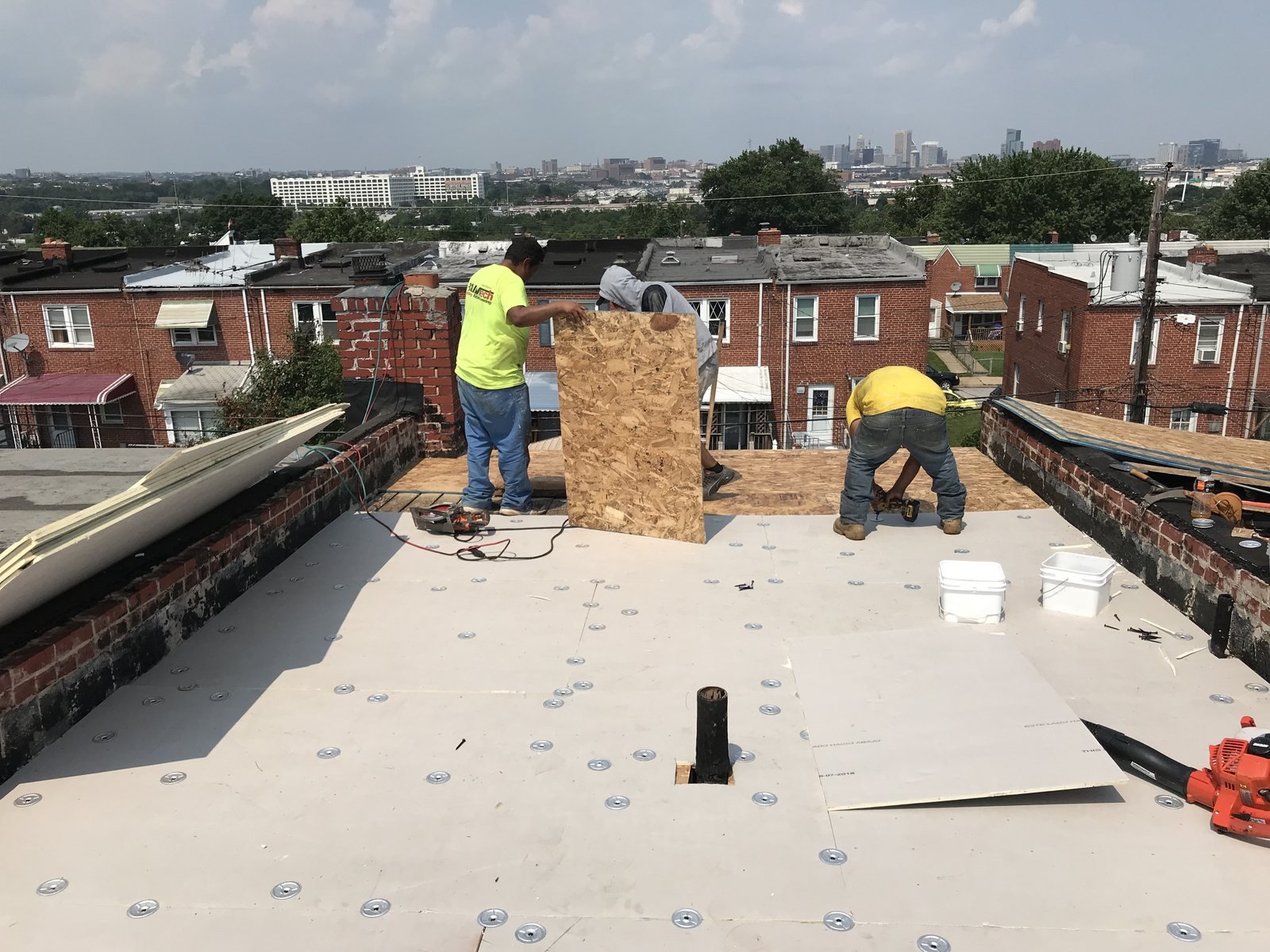
Asphalt shingles are the most common residential material in Pikesville, MD, and inspectors know exactly what failure signs to look for: granule loss, cupping, cracking at the tab lines, lifted edges near the ridge. The assessment is methodical but relatively fast.
Other materials take longer. Slate roofs require close visual inspection of each individual field tile, the condition of the copper or lead flashing, and the integrity of the mortar at hip and ridge caps. Cedar shake inspection involves probing for soft spots, checking for moss infiltration beneath the surface, and evaluating the spacing for moisture retention. Flat membrane roofs, whether TPO, EPDM, or modified bitumen, require a different skill set entirely, including seam inspection and often infrared scanning to locate trapped moisture that is invisible to the eye.
Age compounds everything. A 25-year-old roof has had more thermal cycling, more freeze-thaw stress, and more opportunity for flashing to separate. Inspecting it takes longer because there is simply more to find. A newer installation in the same neighborhood may clear in half the time.
Inspection Method and Reporting Depth
A basic visual assessment from the eaves and a few rooftop photographs is the cheapest option. It is also the least informative. Contractors who walk the surface, probe suspect areas with a moisture meter, and check the attic for signs of water intrusion, inadequate ventilation, or rafter damage are delivering a genuinely different product.
Drone-assisted inspections have become more common, particularly on steep or high-profile roofs. The drone captures high-resolution imagery that the inspector reviews in detail, which reduces on-roof time but adds equipment and post-processing costs. Infrared thermal imaging, used to detect moisture below the surface membrane without destructive testing, runs $300 to $600 as a standalone service in the Pikesville, MD market and is worth every dollar when you are buying a home with an older roof.
Written reports vary just as widely. A one-page summary with three photos is not the same as a 15-page document with annotated images, material condition ratings, estimated remaining service life, and repair priority rankings. Bravo Roofing produces the latter for clients who need documentation for insurance claims or real estate transactions, and that level of reporting takes real time to compile.
If an assessment reveals damage significant enough to warrant replacement, understanding the full scope of that work is the logical next step. Homeowners in the area can learn more about roof replacement in Pikesville, MD to understand what that process involves and what to expect from a contractor.
Purpose of the Assessment and Who Orders It
The reason behind a roof inspection shapes its scope and its cost. A pre-purchase inspection for a buyer’s real estate attorney needs documentation. An insurance claim inspection needs photo evidence tied to specific storm damage, with date-stamped images and a written narrative. A routine maintenance check for a homeowner who just wants peace of mind is a lighter lift.
Contractors also price differently based on whether the inspection is a standalone service or a precursor to a bid. Some companies offer free assessments because they expect to convert the visit into a repair or replacement sale. That is not inherently dishonest, but it does mean the inspector has an interest in the outcome. A paid, independent assessment carries no such conflict.
Post-storm inspections in the Garrison area often spike in demand after a significant hail or wind event, and some contractors charge a premium during those periods due to scheduling pressure. Booking outside of peak demand windows typically brings the price back down. If the assessment does lead to a full replacement project, it is worth comparing regional pricing, such as roof replacement in Reisterstown, MDto understand how scope and material choices affect total cost across similar markets.
Bravo Roofing serves homeowners throughout Pikesville, MD and the surrounding area as a trusted roofing contractor resource for honest assessments and reliable repair work. The office is located at 1829 Reisterstown Rd Ste 350, Pikesville, MD 21208, and can be reached at (443) 450-6110.
Frequently Asked Questions
What factors affect the cost of a roof assessment?
The cost is influenced by roof size, pitch, and access complexity. For example, a steep roof may require additional safety equipment and labor, increasing the overall price.
How long does an inspection typically take?
A simple roof can take about 45 to 60 minutes, while a complex roof with multiple features may require two to three hours. The time spent directly impacts the cost, as more intricate assessments demand more labor.
What should I prepare for when scheduling an inspection?
Ensure clear access to the roof and surrounding areas to facilitate the inspection process. If your home has dense landscaping or limited clearance, this may require extra setup time, which can affect the cost.
What are common mistakes to avoid when getting an inspection?
One common mistake is selecting a free assessment without understanding the potential conflict of interest, as the inspector may aim to secure a repair or replacement job. Additionally, not considering the depth of the inspection can lead to missing critical issues that could incur higher costs later.
Get Directions to Bravo Roofing
🎧 Listen to this as a podcast
Also on Apple Podcasts, Spotify, and Amazon Music.